Chile
September 2023

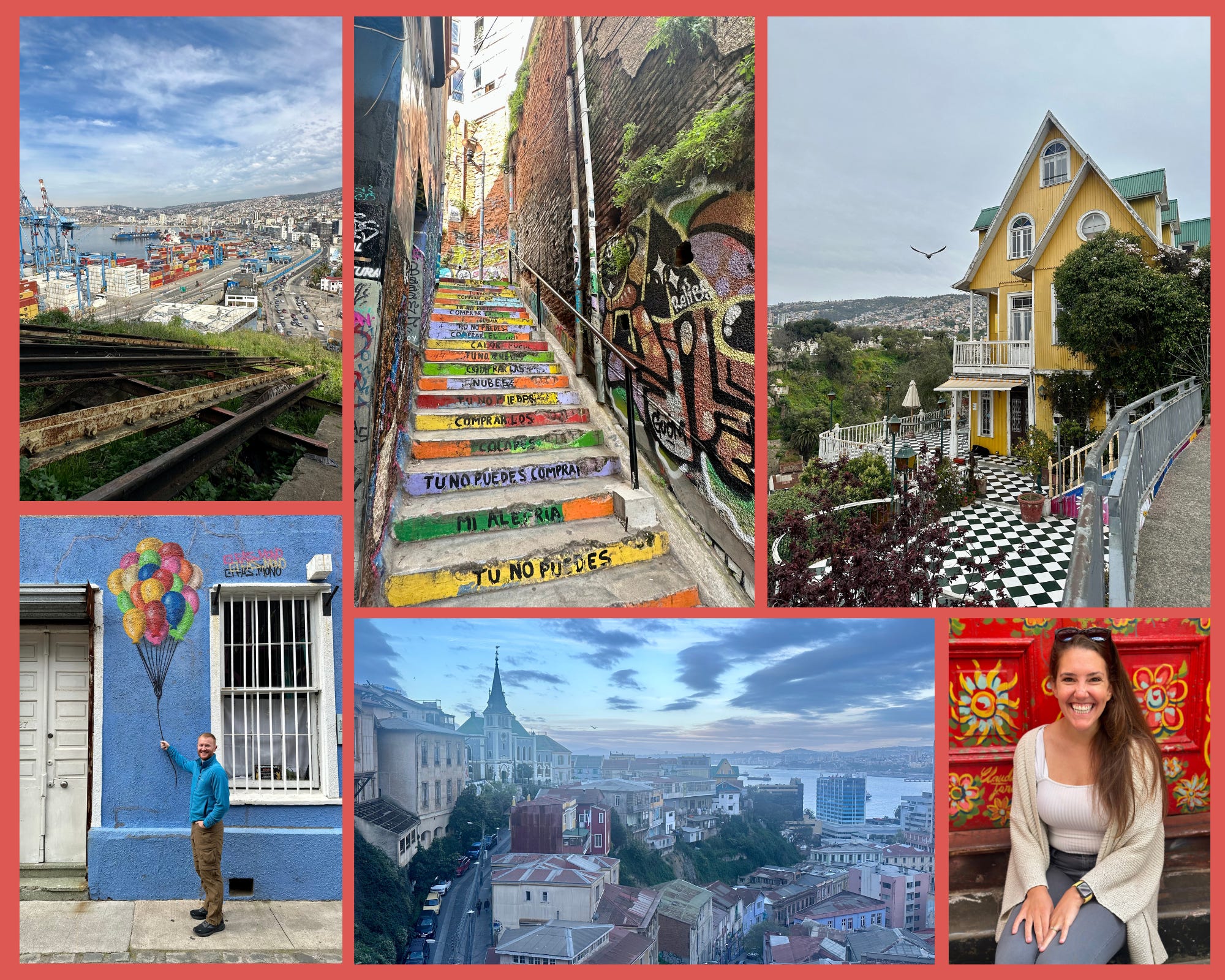
After our adventures in the Alps and Ireland, we returned to Latin America for a quick trip to Chile. We began this next chapter of our journey in one of my all-time favorite cities: Valparaíso, Chile. What makes Valparaíso so special? For me, it’s a blend of nostalgia from when I visited the city while studying abroad in Santiago as an undergrad, and the simple joy of wandering through the streets and steps that snake up and down this city of hills.
Throughout our week in Valparaíso, we opted to be laid-back tourists. We had explored the city in 2018, during our last visit to Chile, so we didn't feel the need to revisit many of the tourist spots. Instead, we spent a lot of time finalizing plans for the final three months of our sabbatical year 😢. Otherwise, I was happy to wander the main historic hills and Shane was happy to look over the Pacific Ocean and Valparaíso’s bustling port below. Shane, having an inexpressible love for container ships, was in hog heaven just watching the rail-mounted cranes offload containers and all the other sophisticated cargo operations.
At the same time, we felt Valparaíso had changed significantly since our last visit. Outside Cerros Alegre and Concepción, other parts of the city felt a bit dodgy. A concurrence of factors—including the protests and riots that swept the country starting in October 2019 (the “estallido social”), the COVID-19 pandemic, and a general increase in crime, inflation, and immigration—seem to have shaken the spirit of the city. All the same, I will always love Valparaíso. And during our week there, we looked forward to our daily walks where at every turn you’re sure to find some mural, promenade, or funicular popping with color and full of character.
After Valparaíso, we flew roughly 1,000 miles from the center of the country to San Pedro de Atacama in the very north of Chile. The town is situated in the heart of the Atacama Desert, one of the driest places on Earth. Its otherworldly landscapes—with vast salt flats, high-altitude desert, and lunar-like rock formations—are stunning and surreal. Needless to say, my fascination with geology and geography was ignited again. Like, how is it possible that certain areas in the desert do not register any rainfall at all? How can it be that many mountains higher than 6,000 meters/20,000 feet are completely glacier-free?
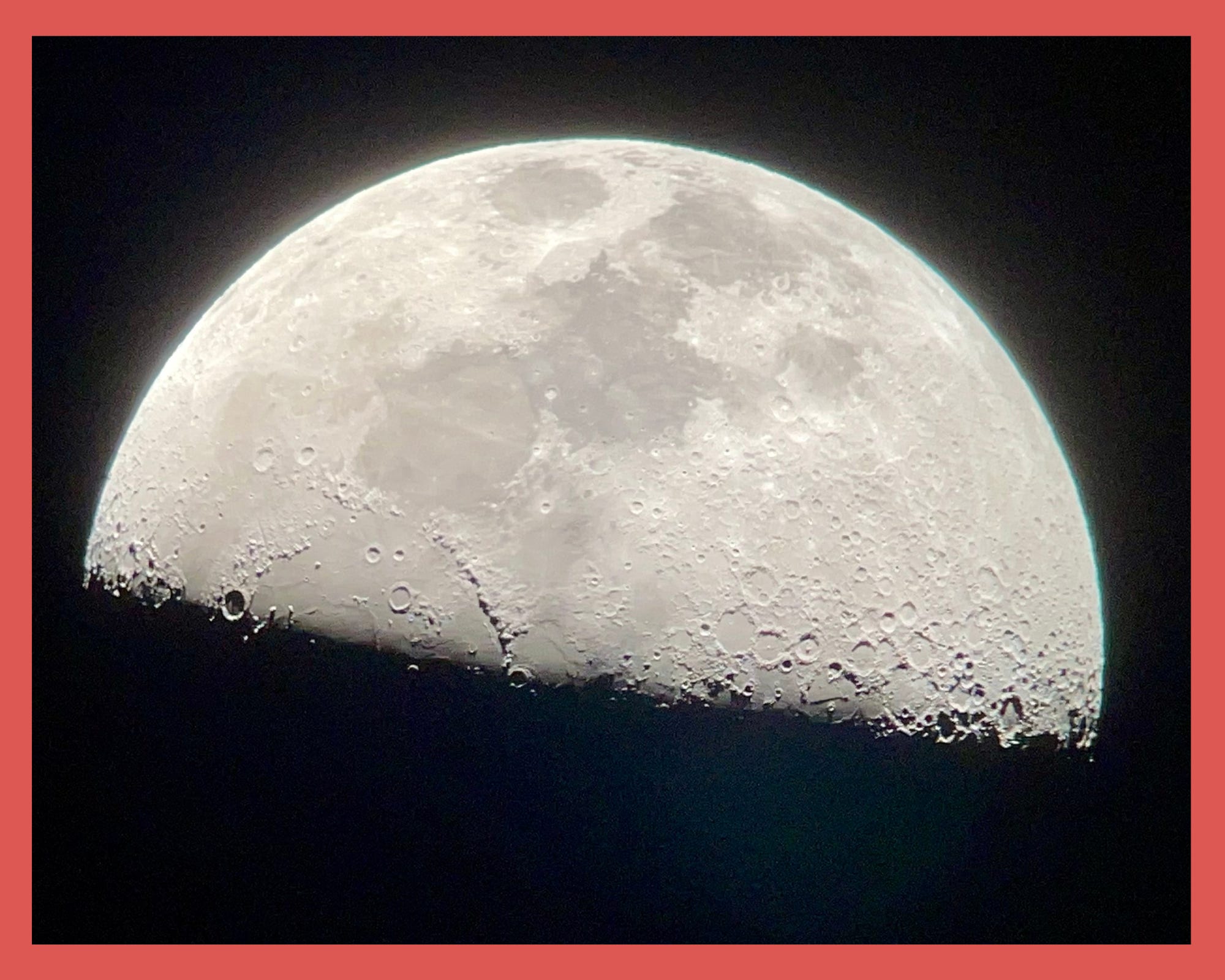
Our first night we signed up for a stargazing tour. While the Atacama Desert is largely considered the best place in the world for stargazing—it’s high, dry, and essentially has no light pollution—our timing wasn’t perfect. The moon was half-full, bright, and smack dab in the middle of the Milky Way, obstructing our view of many well-known constellations. Still, we really enjoyed learning a lot about astronomy and observing several celestial objects through telescopes, like Jupiter and even Saturn and its rings!
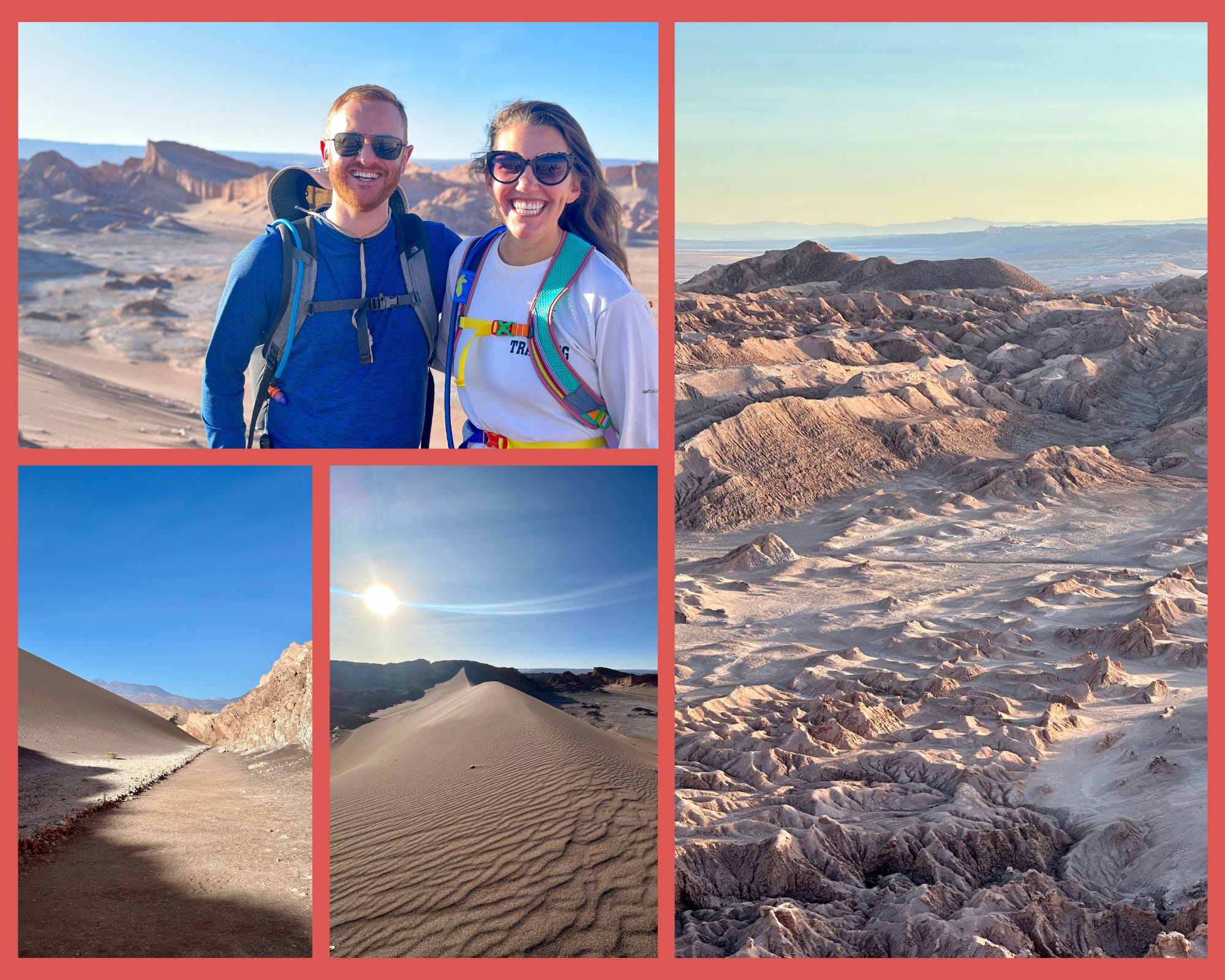
We packed the following days with tours around the area. First, we visited Valle de la Luna, or Valley of the Moon, characterized by its sweeping sand dunes, ragged rock formations, and salt sculptures. While the desert's profound aridity makes plant and animal life virtually nonexistent, we did find one lone bush that braved to grow there. In fact, the Atacama Desert is such a desolate place that NASA uses it to test tools and techniques, including prototype Rovers, to try to detect life in the desert—the idea being that if you can’t find life in Atacama, why send the equipment to Mars?
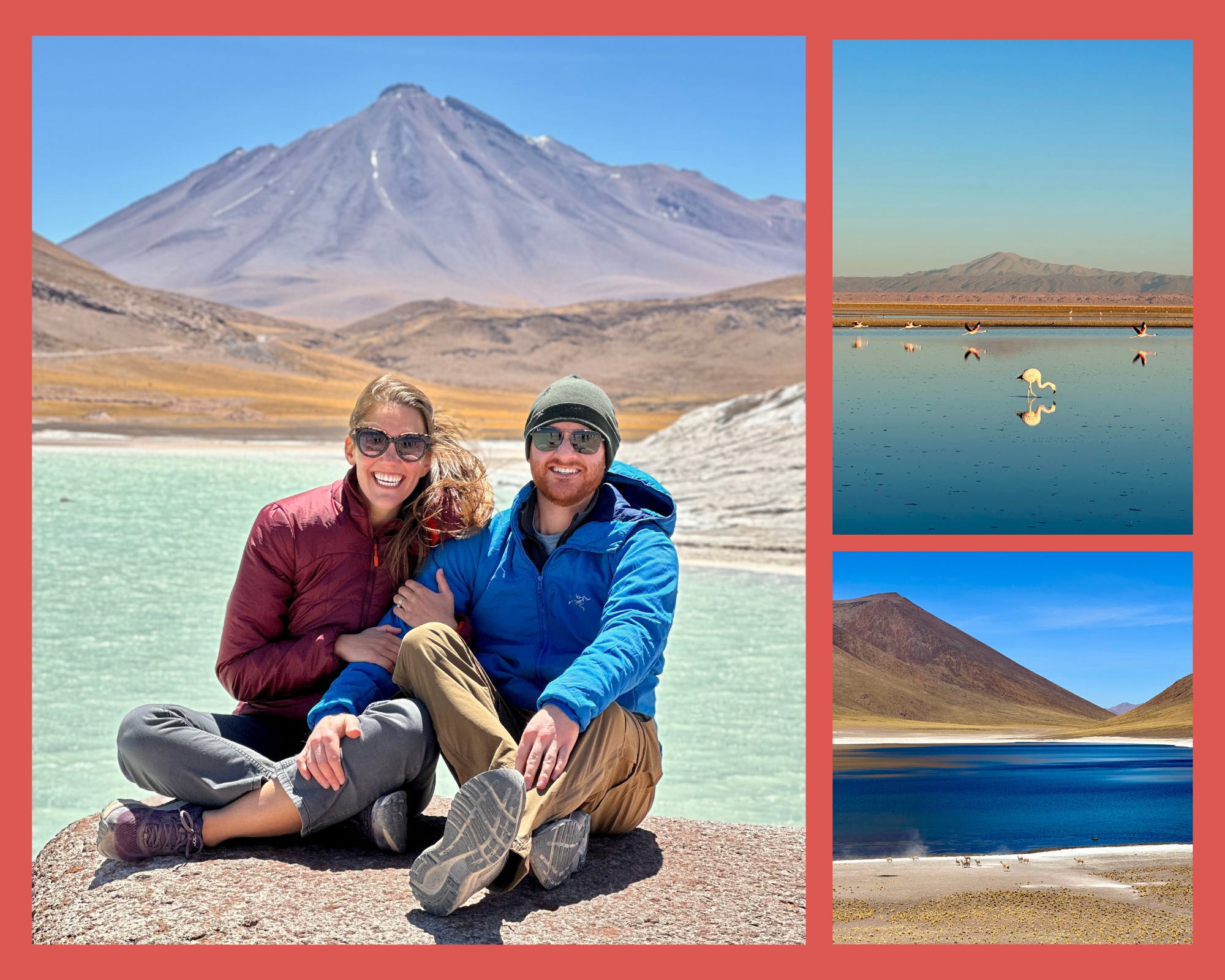
The next day, we signed up for a jam-packed day-tour visiting three other amazing and unique landscapes. Just as the sun was rising, we stopped at Laguna Chaxa, a pastel-colored salt flat with flamingos. Later on, we visited Miscanti and Meñiques Lagoons where we watched groups of vicuñas—essentially wild alpacas—get all macho and charge at each other. For our last stop of the day, we went to Piedras Rojas (Red Rocks), known for its turquoise waters and stunning views of the surrounding mountains. Situated over 4,000 meters/13,000 feet above sea level, reaching the Piedras Rojas was an important stop as we acclimatized ourselves for an even higher-altitude adventure the following day.
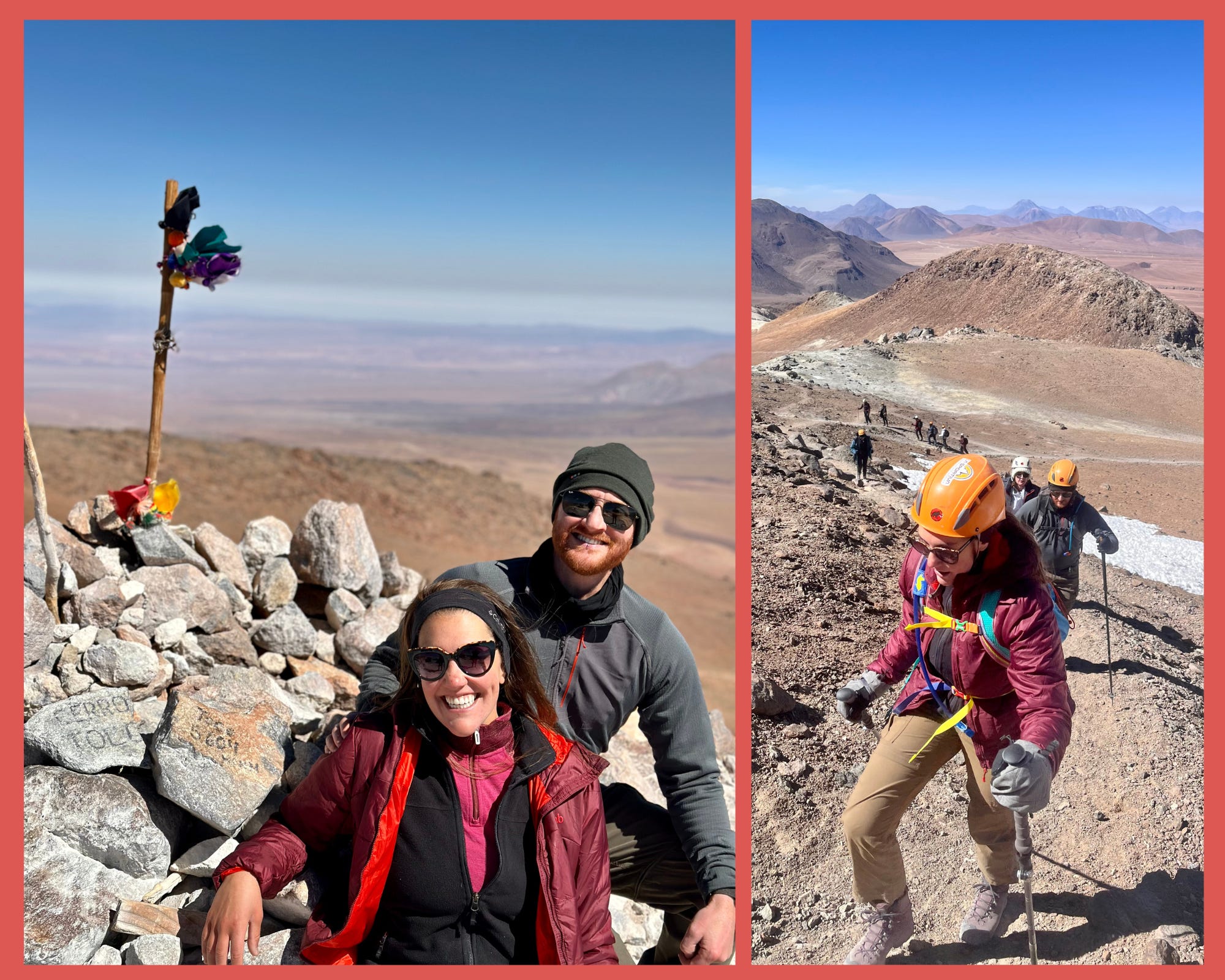
For our final day in San Pedro de Atacama, we hiked up Cerro Toco. To put this hike into perspective, we would reach altitudes higher than Everest base camp! While we had been nervous about acclimatizing correctly in the days leading up to this hike, we both felt fine during the ascent and were the first two to reach the summit at 5,604 meters/18,385 feet—the highest altitude either of us has ever climbed! We were rewarded with panoramic views of the Chilean altiplano, the Laguna Blanca in Bolivia, and the beginnings of the border with Argentina deep in the Andes Mountains. We were, and are, very proud of this accomplishment.
Our first taste of Chile for the year was a success. Having had such a good time and with plans to return later in the year, albeit to the opposite end of the country, saying goodbye felt a bit easier. So we boarded a bus and embarked on an ~11-hour journey across the Andes to Salta, Argentina.